Here are some of my recent publications.
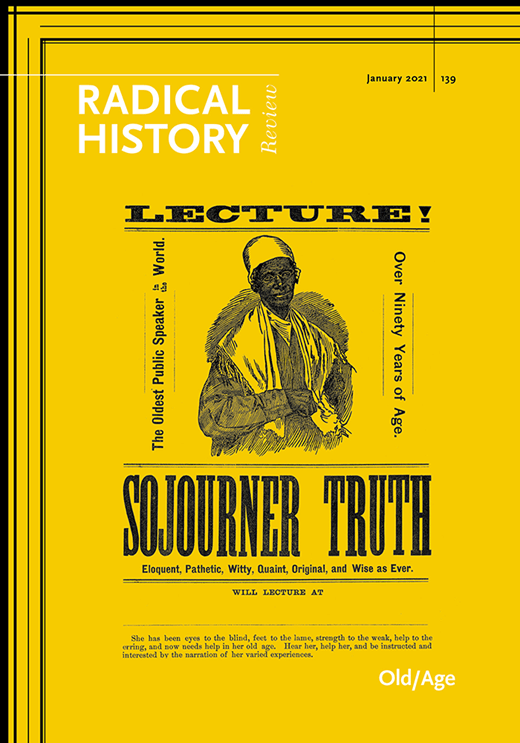
Between Archives: Yerushe, Intergenerational Collaboration, and Aging in Queer Family
Radical History Review, Issue 139 (January 2021)
Drawing on critical aging studies, this article argues that queer relations inform understandings of loss, family, and belonging. What happens when older adults review, rehearse, and reappropriate historical texts? What is possible when archives serve as a space of dialogue? How do aging and death impact queer memory transmission? The article analyzes research methods while examining queer family as a tool for intergenerational collaboration. This work rethinks designations of “generation” and “aging” by applying nonheteronormative frameworks. short bio with personal history, key achievements, or an interesting fact.
“Come Out Slugging!” The Atlanta Lesbian Feminist Alliance, 1972-1975
Southern Cultures, Vol 26, Number 3 (Fall 2020)
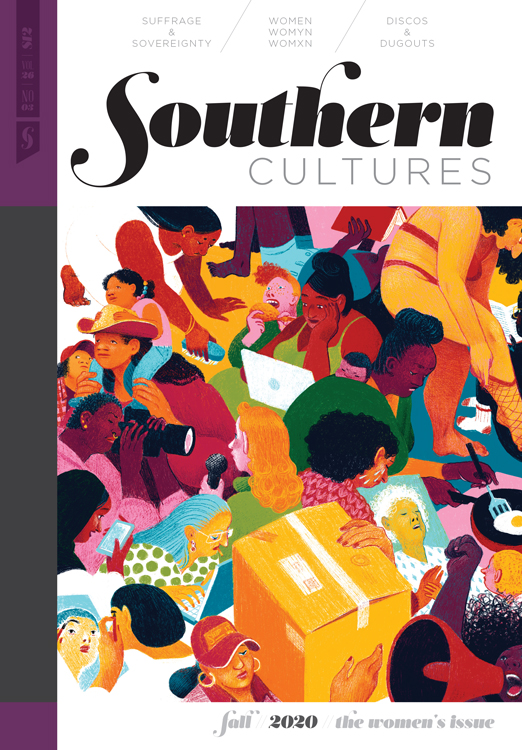
This article chronicles the formation of the Atlanta Lesbian Feminist Alliance (ALFA) and its creative grassroots activism from 1972 to 1975. Studying ALFA offers a critical window into how lesbian feminists were envisioning political organizing, coalition building, and sports in the New South. ALFA utilized radical strategies learned in prior movements, from antiwar to civil rights activism, to create a lesbian feminist politic in Little Five Points, Atlanta. Drawing on oral histories, this essay studies ALFA activism to challenge media coverage of lesbian and gay life, pass the Equal Rights Amendment (ERA), utilize the “softball strategy,” and build regional networks through the Great Southeast Lesbian Conference. ALFA involvement in campaigns to pass the ERA highlight the complexities of coalition building in the women’s movement. ALFA’s creation of an out-lesbian softball team in 1974, which widened membership and raised visibility, demonstrates the use of recreation as an organizing tool.
Analogy: A Trilogy
Oral History Review, Vol 45, Issue 1 (Winter/Spring 2018)
Media Review of a performance by the Bill T. Jones/Arnie Zane Company, Durham, NC, 2017.
This trilogy draws on oral history and explores our historical method’s parameters of narration and embodiment. The performances were linked through emotional connection grounded in dialogue, mediums of recorded memory, and persistent listening for queer pasts. While the Analogy trilogy draws parallels of illness, loss, and war, one aspect that particularly ties the three pieces together can be referred to as an ethos of queer familial connectivity. This methodology looks at relations through a prism of nonhetero familial ties. Using oral history as a dance method, the company presents an intersectional and intergenerational project of queer remembering.
Terezín Art: A (Queer) Family Postmemory
Past (Im)Perfect Continuous: Trans-Cultlural Articulations of the Postmemory of WWII
Sapienza University Press, 2021

In this chapter, I analyze four pieces in the collection of Terezín art that hung in the TV room of my donor’s parents. Art in Terezín was a tool of documentation, reflection, and a way of countering Nazi narratives in international settings. How did these drawings transmit traumatic historical experience differently from US narratives of Holocaust commemoration? How was this transmission framed by the queer lineage of our connection? As the parents of my biological father and not my lesbian mothers, my grandparents sat outside my “family” in some ways; in equal measure, I was outside their family. Our relationship complicates notions of heredity and “biological traceability” (Eng 33) embedded in concepts of memory, diaspora, and belonging.
 Rachel Gelfand, Ph.D.